



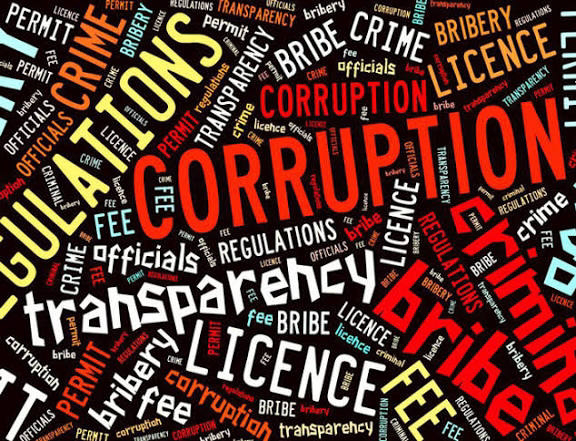
Every year, Uganda loses trillions of shillings to corruption, according to reports from the Inspectorate of Government and the Office of the Auditor General of Uganda. These reports repeatedly reveal misuse of public funds, procurement fraud, ghost workers, and abandoned government projects. Yet despite the scale of the problem, very few high-profile convictions ever follow.
For ordinary citizens, the consequences are visible everywhere—unfinished roads, under-equipped hospitals, dilapidated schools, and youth unemployment. The money exists on paper. It is approved in budgets and announced in government programs. But somewhere between allocation and implementation, it disappears.
The Gap Between Budgets and Reality
Every financial year, Uganda’s national budget allocates billions of shillings to infrastructure, education, healthcare, and agriculture. Parliament debates and approves these allocations with the promise that they will transform communities and stimulate development.
However, many of these projects stall or never materialize.
Across the country, communities have seen classroom blocks built without roofs, health centers lacking essential medicines, and road projects that remain half-completed for years. In some districts, funds meant for water projects have reportedly been spent, yet residents still walk long distances to access clean water.
The gap between budget promises and on-the-ground results raises a fundamental question: where exactly does the money go?
Ghost Workers and the Payroll Problem
One of the most persistent forms of public financial leakage has been the discovery of ghost workers on government payrolls.
Investigations by the Office of the Auditor General of Uganda have repeatedly uncovered thousands of nonexistent employees receiving salaries through manipulated payroll systems. In some cases, salaries are paid to individuals who no longer work in government service. In others, completely fictitious identities are inserted into payroll databases.
These ghost workers drain billions of shillings from the public treasury every year—money that could otherwise fund teachers, nurses, and essential public services.
While government has occasionally carried out payroll verification exercises to remove these fake entries, the problem continues to reappear, suggesting that deeper systemic issues remain unresolved.
Inflated Contracts and Procurement Irregularities
Public procurement is another area where enormous sums are lost.
Large government contracts—especially in infrastructure—are often plagued by inflated costs, questionable bidding processes, and poor supervision. Roads may be contracted at prices far above regional averages. Construction companies may receive advance payments while delivering substandard work.
Sometimes projects are paid for but never completed. Other times, contractors abandon sites altogether.
Procurement irregularities not only waste public funds but also undermine development outcomes. Communities wait years for projects that were supposed to improve their lives.
Weak Accountability and Political Interference
Uganda does not lack anti-corruption institutions. The country has agencies tasked with investigating and prosecuting corruption cases, including the Inspectorate of Government and the Directorate of Public Prosecutions.
However, many observers argue that the problem lies not in identifying corruption but in enforcing consequences.
Reports detailing misuse of funds are published every year, but prosecutions often move slowly or stall entirely. In some cases, political interference is alleged to shield powerful individuals from accountability. Lower-level officials may face disciplinary action, but high-ranking figures rarely face meaningful penalties.
This pattern has created what many analysts describe as a culture of impunity.
The Cost to Citizens
Corruption is often discussed in terms of lost money, but its real cost is measured in human lives and missed opportunities.
When funds meant for hospitals disappear, patients go without medicine. When education budgets are misused, students study in overcrowded classrooms with few resources. When infrastructure projects stall, businesses struggle to grow and create jobs.
For young people especially, corruption can feel like a barrier to opportunity. Instead of public resources being used to create employment and development, they are diverted into private pockets.
The Path Forward
Experts and civil society organizations have repeatedly called for stronger accountability mechanisms.
Some proposed reforms include:
- Strengthening the independence and capacity of anti-corruption institutions.
- Increasing transparency in government procurement processes.
- Protecting whistleblowers who expose corruption.
- Digitizing government systems to reduce opportunities for manipulation.
- Ensuring that corruption cases are prosecuted without political interference.
Public participation also plays a critical role. Citizens, journalists, and civil society groups must continue demanding transparency and holding leaders accountable.
A Question That Still Demands an Answer
The question of where Uganda’s public money goes remains one of the country’s most urgent governance challenges.
Until corruption is met with real consequences, the cycle is likely to continue—budgets will grow, projects will be announced, and communities will keep waiting for development that never arrives.
For taxpayers, the issue is simple: public money should serve the public.
But until accountability becomes the norm rather than the exception, many Ugandans will continue asking the same question year after year.
Where does the money really go?














Comment Test
I care. So, what do you think of her, Han? Don’t underestimate the Force. I don’t know what you’re talking about. I am a member of the Imperial Senate on a diplomatic mission.
Comment Test 2
I care. So, what do you think of her, Han? Don’t underestimate the Force. I don’t know what you’re talking about. I am a member of the Imperial Senate on a diplomatic mission.
Comment Test 3
I care. So, what do you think of her, Han? Don’t underestimate the Force. I don’t know what you’re talking about. I am a member of the Imperial Senate on a diplomatic mission.
Comment Test again
I care. So, what do you think of her, Han? Don’t underestimate the Force. I don’t know what you’re talking about. I am a member of the Imperial Senate on a diplomatic mission.